The best time for a Torres del Paine day tour
Seasons run the other way round here, so summer falls in December and winter in June. Long light, strong wind, autumn color and open cafeterias do not all arrive together. This page sets out what each part of the year gives a day visitor and what it takes away.
The trade between light and wind
For most first visits, March and early April are the months we would choose. The windiest stretch has usually passed, the days still have 10 to 12 hours of light, and the cafeterias in the park are normally open.
December to February wins on daylight and loses on wind, which blows hardest from late spring through summer. If your trip falls then, it is still a good time for a Torres del Paine day tour, provided the jacket is right.
No season clears the cloud. The three towers can stay hidden all day in January or in July, and panoramic tours go out in rain or snow unless conditions are extreme.
Four seasons in numbers
The figures below are averages for Puerto Natales, where most of the tours start. The park is usually cooler and windier than the town, so take them as the friendly end of the scale.
| Season | Daytime high | Hours of light | What stands out |
|---|---|---|---|
| Summer, December to February | 15–16°C (59–61°F) | 14–17 | Long days, strong wind |
| Autumn, March to May | 7–14°C (45–57°F) | 9–12 | Lenga forest in color around April |
| Winter, June to August | 5–6°C (41–43°F) | 8–10 | Short days, cafeterias closed |
| Spring, September to November | 9–14°C (48–57°F) | 12–16 | Season opens, wind builds by November |
Daylight matters because the tours keep their clock. A 7:00 am start in June begins in the dark, and the drive home may end in it too.
Summer, long evenings and gusty viewpoints
In December there are about 17 hours of light, more than any tour needs. Even the 15-hour hike has room to breathe, and the evening ride back to town can still be in daylight.
Wind is the price. Open viewpoints catch the full force, and the steep end of the Base Torres trail has little comfort to offer on a gusty day, so a hood that closes tightly beats a cap.
Summer also needs early planning. GetYourGuide labels Paine Travel's hike likely to sell out, and Patagonia Planet's tour is booked 59 days ahead on average, so settle the tour date early.
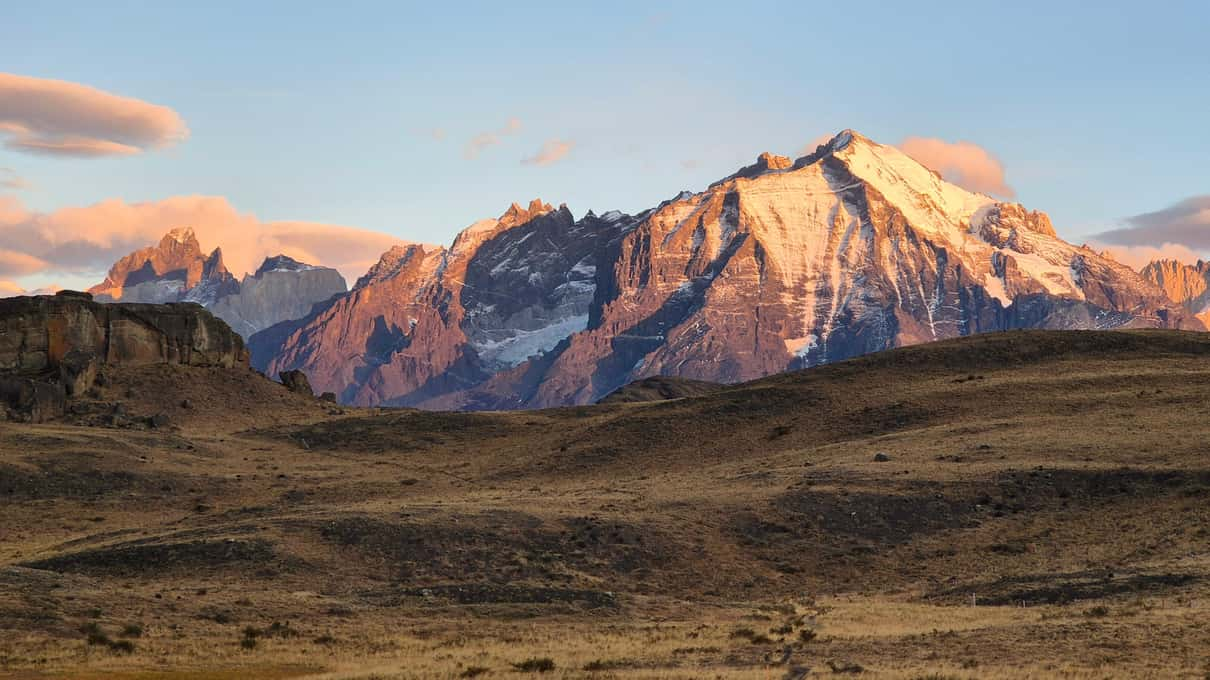
Autumn, red forest and calmer air
March still feels like late summer, with highs near 14°C (57°F) in town. By April the lenga beech turns red and orange, which shows up most on walks through forest.
The climb to the base of the towers passes through that forest. Paine Travel's hike at ~$99 gets you there with a guide, though the park sets an earlier clock in these months.
By late April the light is down to around ten hours and the cafeterias are close to their winter break. May is colder still, so treat it as winter when you pack.
A van day for a season you can't predict
The panoramic day by the company W Circuit Patagonia asks for short walks, so it copes with wind and showers better than a long hike does. It leaves Puerto Natales at 7:00 am with up to 15 people.
Winter, fewer hours and a guide rule
June and July bring highs near 5°C (41°F) and about 8 hours of light. A panoramic day fits that light better than a long trail, because the van does the distance and the stops are short.
A certified guide is compulsory on the Base Torres trail between May 1 and September 15, and hikers must leave the lagoon by 2:00 pm. Check the calendar of any hike before building a winter trip around it.
The park cafeterias, Pudeto and Pingo, close outside roughly October to April, so winter visitors should carry lunch. Our pick includes no food in any season.
Go Patagonia says its tour from Punta Arenas runs every day of the year. The 16 hours look long in winter, as the Punta Arenas page explains.
Spring, when the season wakes up
Light returns fast, from about 12 hours in September to 16 in November. Scheduled buses from Puerto Natales mostly start again between September and early October, so the bus or tour question reopens then.
October is the gentler half of spring for an outdoor day. November is milder on the thermometer but joins the windy stretch of the year, so check the forecast before booking the three walks on our short hikes page.
Trail hours if you plan to hike
The park limits when you may start the Base Torres trail from Laguna Amarga and when you must leave the lagoon. A tour builds its early pickup around these times.
- October and November: start by 10:00 am, leave the lagoon by 3:00 pm
- December to February: start by 10:00 am, leave by 4:00 pm
- March and April: start by 9:30 am, leave by 3:00 pm
- May to September: start by 9:00 am, leave by 2:00 pm
Midsummer gives a slow walker the widest margin. The Base Torres page covers the climb itself, while guided days in Torres del Paine lists the easier choices.
Giving the weather a second chance
One day is a gamble in every month, so keep a spare one if you can. On five of the six tours you can cancel free up to 24 hours before the start and rebook. The day from El Calafate gives the same right on GetYourGuide but not on Viator.
A park ticket for two days or more costs 48,500 CLP and stays valid up to 10 days in a row. That is the sensible choice for pairing a van day with a hike, and the park ticket page has the details.
Whatever the date, pack for wind and rain using our list of twelve things. Then match a tour to your month in our comparison of Patagonia park tours.